Rome: Carbs on a Budget
Mastering Pizza al Taglio and Supplì
The Challenge: Rome
Rome is a city of two extremes. On the main piazzas, waiters will happily charge you €15 for an average plate of pasta and €5 for a bottle of water. Step two streets back into neighborhoods like Trastevere or Testaccio, and the city reveals a completely different, working-class culinary culture that operates brilliantly on a budget. To beat the €20 challenge in Rome, you must embrace eating standing up.
Breakfast: The Espresso Bar Rule
Italian breakfast is sweet, fast, and cheap—provided you consume it at the counter (al banco). If you sit down at a table, the price doubles or triples instantly. Walk into a local bar, pay at the register first, and then take your receipt to the barista.
Order a cappuccino (only in the morning, never after 11 AM if you want to blend in) and a cornetto (the Italian cousin of the croissant, often filled with pistachio cream, jam, or Nutella). Standing shoulder-to-shoulder with locals heading to work, this will rarely cost more than €2.50.
- Item: Cappuccino + Cornetto
- Cost: ~€2.50
- Budget Remaining: €17.50
Lunch: Pizza by the Weight
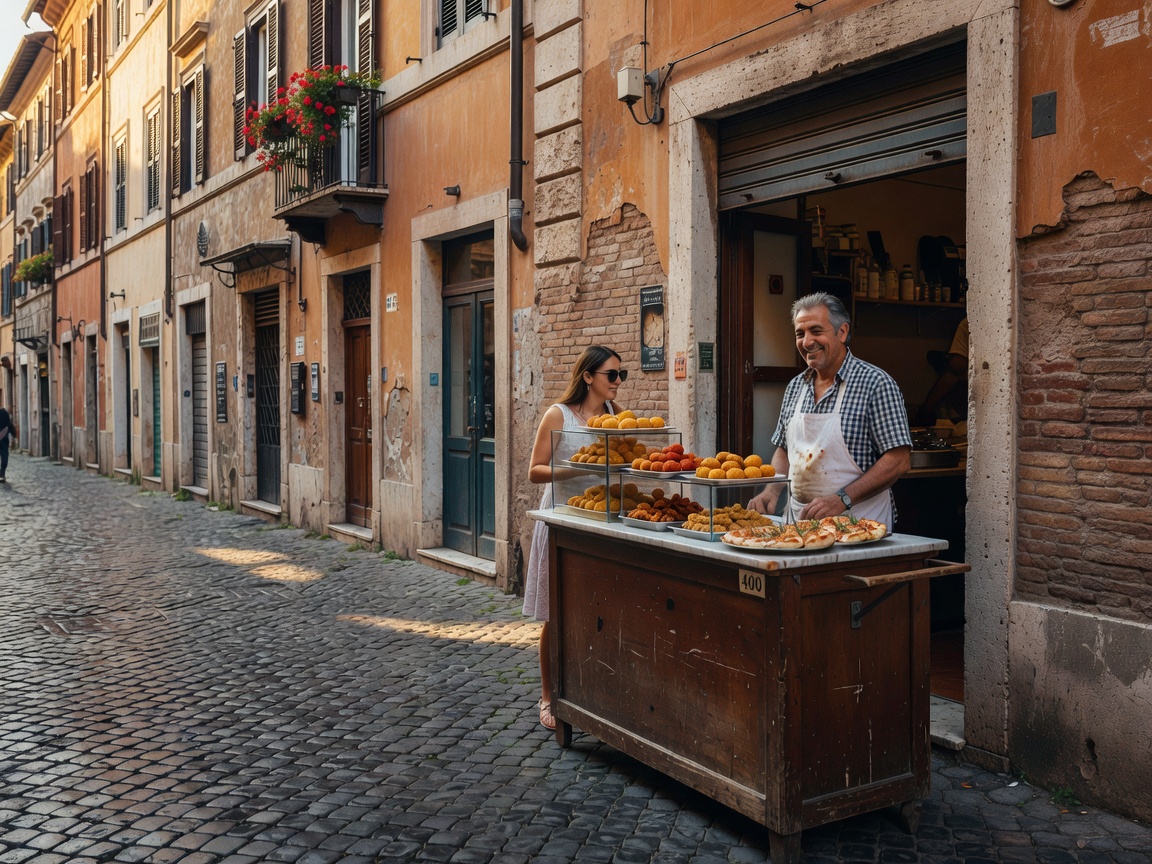
For lunch, you are looking for a sign that says Pizza al Taglio (pizza by the slice). The pizza is baked in long rectangular trays and cut with scissors according to how much you indicate with your hands. You pay by weight, not by the slice.
A classic choice is the Pizza Rossa (just tomato sauce, surprisingly delicious) or Pizza con Patate (thin slices of potato with rosemary and mozzarella). Two generous slices of different varieties will run you about €6.00 to €8.00 depending on the toppings. It's fast, incredibly fresh, and deeply satisfying.
- Item: 2 Slices of Pizza al Taglio
- Cost: ~€7.00
- Budget Remaining: €10.50
Dinner: The Trapizzino & Supplì
With €10 left, you can't afford a sit-down trattoria meal, but you can feast on Roman street food. Start with a Supplì, Rome's answer to arancini. It's an oval ball of rice cooked in tomato sauce, stuffed with a core of mozzarella, breaded, and deep-fried. When you break it open, the cheese stretches like a telephone cord. These cost around €2.00 to €2.50 each.
Follow it up with a modern Roman invention: the Trapizzino. It's a triangle of thick pizza bianca bread hollowed out and filled with classic Roman stews like Chicken Cacciatore, Eggplant Parmigiana, or Oxtail. At around €5.00 each, they are messy, hot, and arguably the best budget dinner in the city.
- Item: 1 Supplì + 1 Trapizzino
- Cost: ~€7.50
- Budget Remaining: €3.00
Pros and Cons of Budget Eating in Rome
Pros
The flavor profile is unparalleled. Even at budget prices, Roman street food utilizes high-quality olive oil, fresh tomatoes, and excellent cheese. The historical backdrop makes eating a €5 sandwich on a 2,000-year-old step an elite experience.
Cons
Vegetable options are somewhat limited in the street food scene. Budget eating in Rome is overwhelmingly carb-heavy. You will eat a lot of dough, rice, and fried items.
Final Verdict
Rome requires knowledge of local customs (like the standing-bar rule) to truly hack the budget, but once you master Pizza al Taglio, the €20 challenge is a joyful, carbohydrate-fueled success. Use your remaining €3 on a scoop of artisanal gelato to celebrate.